Sunday, 26 May 2013

Star Trek Into Darkness


Star Trek Into Darkness, Paramount Pictures, 2013, directed by JJ Abrams. Starring Chris Pine, Benedict Cumberbatch, Zackery Quinto, Zoe Saldana, Karl Urban, Simon Pegg, Alice Eve, John Cho, Anton Yelchin.
 

BOOM! YEAH! STAR TREK!

I was never actually a Trekkie myself, but a combination of my mum (an original 60’s Trekkie who, no lie, got stuck in a lift with Deforrest Kelly one time) and the constant barrage of Trek references scattered across the internet means that when Star Trek came out in 2009, I actually got the references to Red Shirts, the Prime Directive and what the hell was going on with the Romulans. What I didn’t get was how sexy and cool and fun Star Trek was. JJ Abrams went back to the days of old, before Trek became painfully niche and loved only by cellar dwelling mouth breathers, back to a time when Kirk and Spock were young and sexy. Star Trek made Trekking fun again, taking it back to the mainstream where it sits very comfortably. Which is a good thing, because I doubt there’ll be a better blockbuster out this year – Into Darkness is goofy, fun and loud; oh it’s flawed (quite troublingly so in one aspect) but I defy you to have a better time at the cinema this year.

Any film that starts with a discussion of Bentham Utilitarianism inside an exploding volcano is obviously going to be all of the fun, and it doesn’t really let up from there. The characters discuss terrorism, conspiracy, freedom fighters and the politics of war, but they never do so without at least three explosions in the background. 
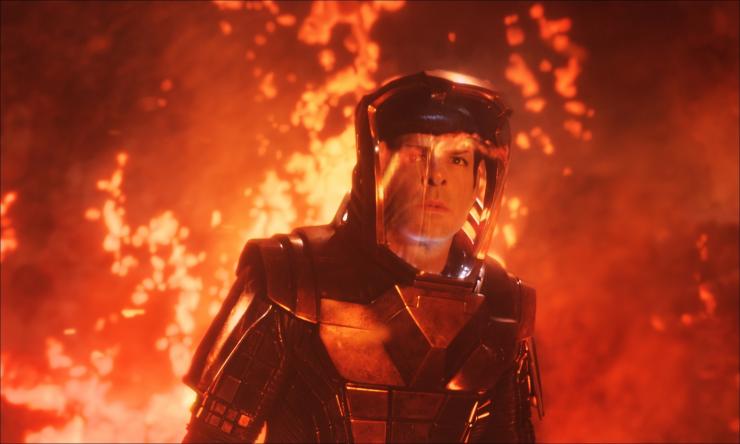

Spock, in a volcano, enjoying a quiet character moment

That’s not to say that the plot doesn’t matter at all - in fact it’s rather good. After a bomb in London kills forty three Starfleet agents, Admiral Marcus enlists Captain Kirk  and The Enterprise to go to the edge of the known universe and destroy the man responsible, rouge agent John Harrison. It becomes Star Trek Into Zero Darkness Thirty, the themes of justice and retribution running throughout the film. Kirk wants to murder Harrison in cold blood, Spock  wants to capture him and put him on trial, Scotty  doesn’t like the weapons of mass destruction Marcus insist they use, Uhura  has to fight for a chance to use diplomacy. However, the juxtaposition of the serious acts of terrorism with the silliness of the lens flares works. The bombastic cinematography means the film never becomes preachy or starts to take itself too seriously. Where The Dark Knight Rises suffocated on its own pretentiousness, it’s never a problem with Into Darkness, evidenced by a very tense scene alleviated by the simple (and very funny) act of Scotty running hell for leather down a massive hanger.

The cast is uniformly excellent, carrying their roles with grace and confidence. Chris Pine is a less confident Kirk this time around, feeling his way around the Captain’s chair after two serious arguments knock his self-assurance and he finds a sense of humility and grace in leadership. Zoe Saldana and Zackery Quinto, astonishingly, make Uhura and Spock’s relationship believable and tender, Simon Pegg’s Scotty becomes an action man and just he about pulls it off. Newcomer Alice Eve as Carol Marcus holds herself with dignity, despite a very gratuitous scene where she gets half naked for next to no reason. Abrams said it was to balance out Kirk’s nude scene, which occurred earlier in the film, but I call BS on that. See, Kirk was half naked, but so were the sexy alien ladies he was with – Kirk was obviously in a position of power and the Male Gaze went unquestioned. Carol, on the other hand, was ogled against her will. Kirk was asserting his authority and his position of power over her; I’m pretty sure that’s sexual harassment, and it’s a sticking point in the film.

However, it thankfully only remains a small sticking point because the Glower of London, formally known as John Harrison, formally known as Benedict Cumberbatch, is too good for something as slight as casual sexism to stop you from having a good time. Cumberbatch is breath-takingly good as a man who would murder forty three people just to get Starfleet’s attention. It’s a testament to his talents as an actor that he remains morally ambiguous despite the music introducing him with a score which, if were any more obvious, would be entitled Hey Look! The Bad Guy’s Here! One thing about 2009 Star Trek was that Eric Bana’s Nero wasn’t that compelling a villain; it is safe to say that this is no longer a problem.
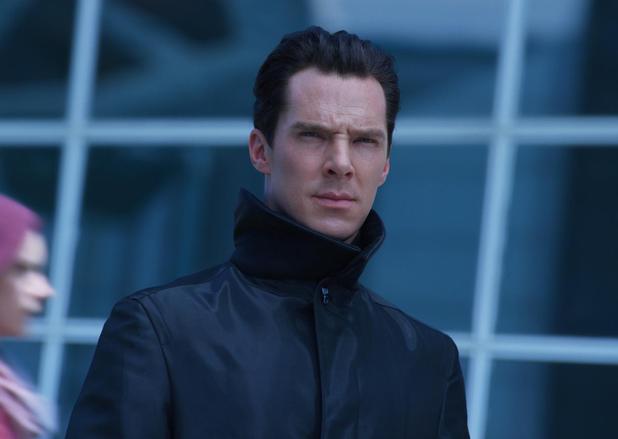
 Seriously though, if he smouldered anymore he’d be on fire

Star Trek Into Darkness is the most fun I’ve had in a cinema in a long time. It strikes a fine balance between the silly and serious, the loud and quiet and is even quite moving in places. I laughed, I gasped, I cried, I even clapped with glee at certain moments - it's just such a shame that one throw away gag demeaned Carol Marcus's entire character. Abrams listened when his villain was weak, hopefully he'll take on board the very valid criticisms about sexism in his films and make good with Star Wars. Ball's in your court, JJ. Don't make the same mistake again.

Tuesday, 7 May 2013

Porn, the Friendzone and Icky Language


So let’s talk about porn. Specifically, its impact on everyday life and the repercussions it has on the world outside of the internet.  Even more specifically, the language people use when describing others, and what that says about them and their expectations of sex after it’s been warped by porn, starting with language.

The reason why I decided to write about this subject was because of a conversation I overheard outside of my library. Two men were swapping stories, when I heard one say this:

‘That bird was a cumslut’.

That’s all. They laughed and carried on talking, oblivious to my impotent rage as I wondered if I could punch them both for been horrible people and having their odious conversation within my earshot. Anger turned to bewildered curiosity as to how this word has come to be. Who even talks like that anyway?

Well, the internet, for one. A search for ‘cumslut’ will result in over three and a half million hits, including a Twitter hashtag, various blogs and Tumblr accounts and endless, endless porn links. Urban Dictionary has the term defined as ‘any loose woman or slut’, a ‘husband’s whore’ and (oh, how this one is my favourite) ‘any little whore that likes dick in her mouth’. It seems that any woman who enjoys giving head is automatically a ‘cumslut’; it’s the virgin-whore dichotomy, that wonderful phrase which quite depressingly seems to summarise the objectification of women. If you haven’t heard of it before, it basically means (in this context anyway) that any woman who enjoys sex, enjoys her partner’s enjoyment of sex and is risqué enough to give a blow job is obviously a filthy whore. However, if she doesn’t want to have sex or touch your junk, then she’s a frigid bitch, who’s probably sleeping around with everyone else anyway.

I think that this means that terminology like ‘cumslut’ is used to control the idea of a woman who likes sex; keep the freaky stuff freaky, but for God’s sake don’t act like you’re enjoying it for yourself because then the man isn’t in complete control. So words are invented to make her enjoyment seem unnatural and weird, and that’s one thing on the internet but in reality? Real life where real people overhear you use words like this? It’s horrible. I would think of something pithy to slam down this word, but in all honesty I’m just sort of depressed by it.

Women are usually controlled in some sense in porn. The classic pizza boy routine shows this: ‘Oh I can’t pay the seven quid I owe you for this pizza with extra sausage, so please – do with me what you will’. By not having the cash on her (which seems like poor financial planning) the woman gives her body as a bartering tool; it’s like the Babylonian slave market, but with terrible lighting. Women are used, abused and handed around like tools, reduced to masturbation aides and then thrown aside; so why not call her a cumslut? That’s all she is and all she’ll ever amount to being.

But this is porn, not real life. Any man who works for Dominoes expecting more than a thank you at the door will be nastily surprised, and probably fired for creeping on the female customers. Adults (please let this be true) know that porn is stupid and is not how people interact in reality, but then again, it’s still obviously a problem that women are expected to behave in a certain way or, by God, there will be consequences. A non-porn example would be the viciously misogynistic ‘friendzone’. The thought process could only go like this when it comes to the friendzone: “What? Be ‘just friends’ with a woman? Give her emotional support and companionship without expecting sex as a reward? Good heavens, what an idea! She must be sleeping with everyone else but me, the whore!”

Don’t believe me? Read ‘Ode to the Nice Guy’ and tell me that the writer doesn’t come off like a whiny weirdo. This piece was everywhere a few years ago, and all you need to do is look on Reddit, Roflzone or 9gag for the remnants of it today: 


It’s funny, because she doesn’t want to sleep with you so you are within your rights to immolate her! HAHAHAHA. HAHAHAHA. HA.

So what does this have to do with ‘cumslut’? Hearing the word in reality means something important; it means what is acceptable (in the most sarcastic of air-quotes you can imagine) on the internet is now acceptable in real life – the concept of a friendzone is now a real thing which real people complain about. Women are polarised as being two different things – a frigid tramp. This is not cool, because it removes any possibility of seeing the women in your life as anything more than potential masturbation tools.

It’s harsh, and I must say that the men I know and am friends with are all very much normal people. In fact, almost all of the men I’ve met are cool, funny and will probably agree that friendzoning is creepy and ‘cumslut’ is not how you should talk about anyone. But if ‘cumslut’ becomes common vernacular, on and offline, I feel that the gender gap will widen even more, vilifying men and debasing women. Which is sad, particularly for delusional pizza boys.

Wednesday, 1 May 2013

Love is all you Need?


Love is all you Need?, Wingspan Pictures, 2013, directed by Kim Rocco Shields. Starring Lexi DiBenedetto, Kellan Lutz, Camilla Belle, Abbie Dunn.


I, like the majority of the population, am straight. I like men and their manliness and I’m fascinated by how straight women indulge in billions every year on books and magazines for how to get a straight man to like you, as if sex and procreation is a relatively new thing we’re still figuring out. I don’t really care whether you are straight or not; you are who you are, and I like to think that the Western world is now somewhere that this sentiment is shared by the majority of people. So it’s interesting to watch this short film by Kim Rocco Shields where straight people are the minority in a homosexual society. 

In this is a world, heterosexuality is a filthy sin. There are some really nice touches, such as the ‘Marriage is Equal’ sign with two male stick figures and the heterophobic Bible verses in the opening credits – this is a world which ought to be similar, but with these roles switched. This is simple enough, but it is a compelling way to make straight people think for twenty minutes about what life could be like if we weren’t so assuredly in the majority.

We follow young Ashley, an 11 year old girl who likes boys, much to the horror of her teachers and the disgust of her classmates. She’s alienated and bullied mercilessly until she decides to take her own life rather than admit to her parents that she’s heterosexual. This is sad, and what’s made even worse is that all of the abuse Ashley receives is based on actual accounts of homosexual kids in America. So the name-calling, hitting, isolation and humiliation are an amalgamation of several children’s torment, and the idea that this would drive a child to suicide is both horribly sad and real. I don’t feel like I can comment on this angle of the film because I’ve never known bullying like this, nor can I understand the mindset of someone who thinks this is an acceptable way to treat other people. Ashley’s loneliness is heartbreaking and Lexi DiBenedetto is a naturally gifted actress.

However, I have serious issue with the treatment of religion in this film. There is a scene where Ashley’s family are in church and a female priest raving about how hetero’s who breed outside of the ‘season’ are hateful and will burn in hell. Now, I’m fully aware that there are some priests that do teach this about homosexuals, but guess what? They do not represent the majority of priests! Many, many priests see homosexuality as a natural state for some people to be born into and they teach that ‘Love is patient, love is kind. It does not envy, it does not boast, it is not proud’. A lot of Catholics don’t believe that same-sex marriage should be allowed; they do not however, hate homosexuals, because 'not hating people' is sort of integral to the Catholic message. My point is that the hysteria generated around the priest and religion is just nonsense. It’s the modern world with iPhones and Facebook, yet the hysterical priest belongs more in the Dark Ages. This reversed interpretation bears no relation to the experience of church today and is just pointlessly provocative.

Love is all you Need? is an interesting ‘What If’ film, of the same sort as Kevin Willmott's The Confederate States of America, but it rings hollow. the film doesn’t give itself enough time to flesh out the nuances of a homosexual society, like the idea of a ‘breeding season’ and a female Pope, but everything else seems like it’s just swapped hetero for homo and made everyone about ten times more homophobic than in reality. The thing about people is that we don’t irrationally hate just one minority for one reason; we irrationally hate a whole bunch of other people for a plethora of reasons! If the adults in the world were irrational about other things as well I might buy it, but because they aren't, I can’t. If you want to tell the story of a girl who is driven to suicide because of the loneliness, the hostility and the complete lack of understanding she faces day to day, why not do that? The gimmick of a hetero minority ends up just being that – a gimmick which stops a powerfully heartbreaking story from really developing. Ultimately, the film lacked complexity and, beyond DeBinedetto's performance, nuance.

Tuesday, 23 April 2013

Trance

Trance, 2013, Pathé International, Film Four,  directed by Danny Boyle. Starring James McAvoy, Vincent Cassel, Rosario Dawson.


One thing that must be said before anyone can start talking about Danny Boyle is that he's already made the perfect film. It was a shocking, funny, an emotional rollercoster of high imagination which showed an intelligence and cinematic awareness that just can't be beaten. I am, of course, talking about the Mr. Bean skit from the London 2012 Opening Ceremony (and I guess Trainspotting's pretty decent too). He's still at the top of his game is our Danny, but what happens when you've already reached perfection?

Boyle's got an electic CV, so it should come as no surprise that the film he releases after the glorious madness of the Olympics and the West End version of Frankenstein is an artsy, time warping, shady little slither of a film which unfortunately doesn't really live up to it's potential. It's not that Trance is bad, it's just that... well, you remember when your teacher told you that they weren't angry with you, they were just disappointed? That sort of sums up my feelings about Trance really. Oh and just so you know, there are going to be minor spoilers, so if you want to see it unsullied, please stop reading now. Cheers.

Still here? Right, first thing first, I like the beginning. James McAvoy's Simon monologuing about the art heists of old was really cool, and I enjoyed the set up and the enevitability of Simon being the inside man of the heist. Actually, there's a lot about Trance that plays with the conventions of Hollywood heist films, pointing them out and finding them rediculous without actually losing any respect for them. So of course the three henchmen are interchangable - they're henchmen! And of course Franck (Vincent Cassel) is foreign - he's a master thief, so he's got to be French and sexy! This I liked, because it was fun and this is a film that should be fun.

The set up of the story is that Simon, an art autioner, bungles the heist of a Goya masterwork. He hits his head and forgets exactly where he put the painting that's now worth £27 million, and the rest of the film is spent trying to find out where it is. There's a hypnotherapist played by Rosario Dawson as well, and that's really all that can be actually said confidently about what the hell is actually going on in this film. I struggled with the constantly jumping narrative, the ever-changing perspective and the seemingly endless chronological shifts that I felt like grabbing the film by the shoulders and slapping it to cure it's hysteria. It's cool to play with narrative, but Trance was leaping around for too long before it actually tried to answer any of its questions, by which point I was bored and annoyed. 

Actually, I wasn't bored, because I was wondering when Danny Boyle decided that all women are good for is sex and treachary. I like Boyle a lot, and I like his female characters as well (Naomi Harris in 28 Days Later for example) but man, he dropped the ball with this one. Dawson's Elizabeth Lamb gets attacked three times by three different guys in the film - three! And the first two make sure to break into her house first and then start assaulting her, but wait! It's not actually attempted rape, it turns out she's into it. Mint. Yeah I know she's supposed to be a femme fatale and it's supposed to be a sly nod at the rediculousness of that archetype, but where the interchangable henchmen worked, having Elizabeth be beaten black and blue, broken into and nearly raped doesn't. By taking the archetype, stripping it of all the sexy power it has, Elizabeth becomes a cowering wreck, only really finding her power again the end, which is unfortunately a little too late.

Elizabeth isn't the only lady in the film either; Tuppence Middleton plays a nameless lady who is a major part of the film and is promptly forgotten about until the end when... yeah, she's promptly forgotten about again. This isn't just irritating because I like Tuppence Middleton and she's a really good actor, but because of the mantra of the film - 'No piece of art is worth a human life'. Middleton is so absolutely tied up in that message, but nothing is said about it, nothing is really done about it and nobody mentions her again. It's a waste of a role, it could have provided a pivotal moment and it was ignored for... well, nothing really.

This means that for all it's twists and turns, Trance is an ultimately unsatisfying film. It's gorgeous to look at and it seems very clever-clever at first, but once you've swilled it around for a bit it does leave a bit of a nasty taste which was never there with Boyle's other films. Still, he said that the film was just a creative release after the endless meetings of the Olympics, so chances are he went a little overboard with the twists and turns because nobody wanted to have a meeting with him about them first. The next one he's doing is the Trainspotting sequel which should be awesome - it's just a shame that Trance wasn't.